


 จองคิวบริการ
 NR tours
 Youplay
 NR shop
 NR jobs
 facebook th
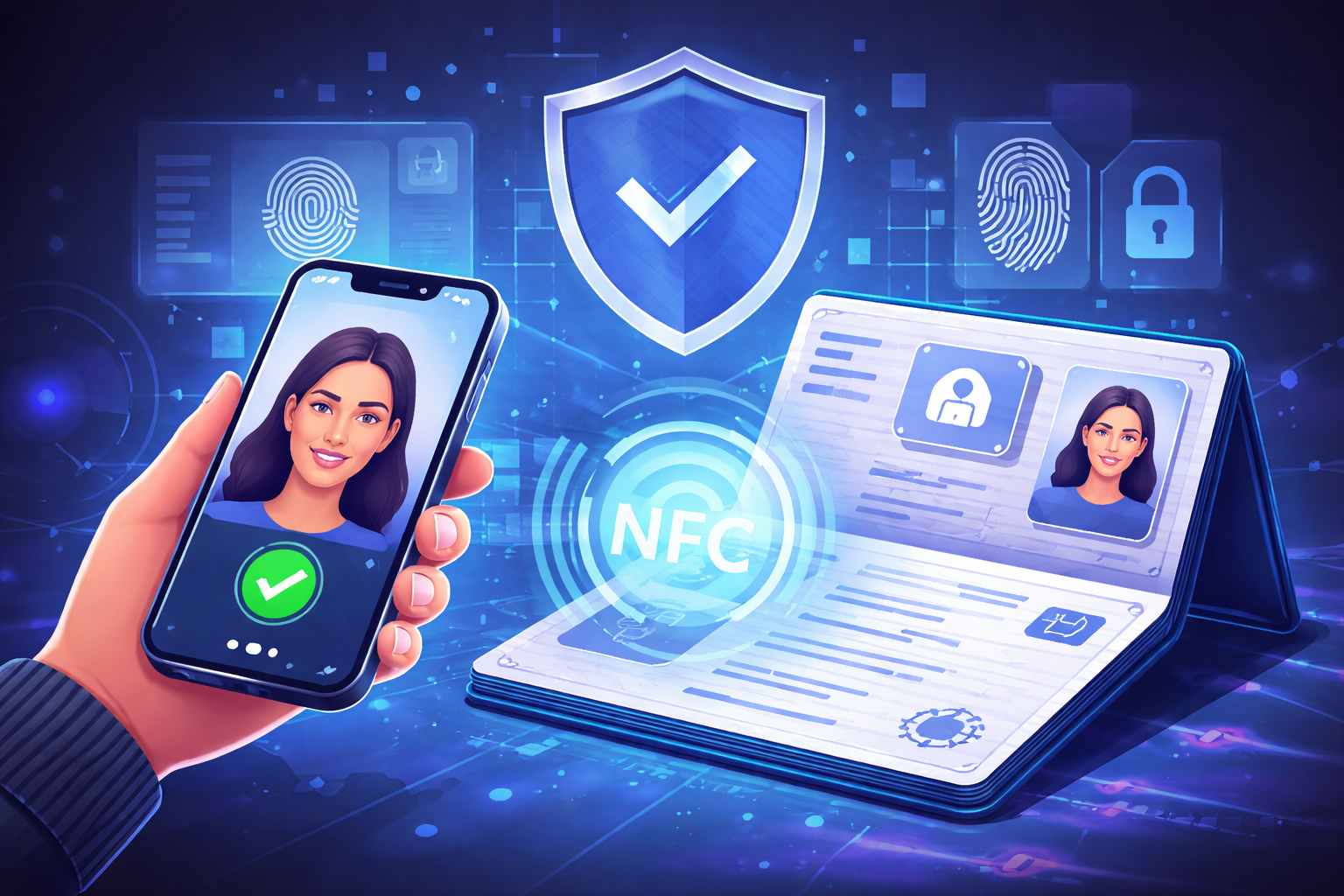
In today’s rapidly evolving digital landscape, businesses require robust and reliable identity verification solutions to prevent fraud and ensure secure user onboarding. Two powerful technologies leading this transformation are NFC verification and the Automated Biometric Identification System (ABIS). Together, they create a highly secure, efficient, and seamless authentication process across industries such as banking, fintech, travel, and government services.
What is NFC Verification?
Near Field Communication (NFC) verification is a contactless technology that enables secure data exchange between devices over short distances. It is widely used for reading embedded chips in ePassports, ID cards, and smart documents. By simply tapping a smartphone against an NFC-enabled document, users can instantly verify their identity.
NFC verification ensures data authenticity because the information stored in the chip is encrypted and digitally signed. This makes it extremely difficult to forge or tamper with identity documents. As a result, businesses can confidently onboard users while reducing the risks of identity fraud.
Understanding Automated Biometric Identification System (ABIS)
An Automated Biometric Identification System (ABIS) is a sophisticated technology that uses biometric traits—such as fingerprints, facial recognition, or iris scans—to identify and verify individuals. Unlike traditional authentication methods, ABIS compares biometric data against large databases to confirm identity with high accuracy.
ABIS works by capturing biometric input, converting it into a digital template, and matching it against stored records. This process is fast, scalable, and highly secure, making it ideal for applications like border control, law enforcement, and financial services.
How NFC and ABIS Work Together
When combined, NFC verification and ABIS create a multi-layered security system. NFC ensures that the identity document is genuine, while ABIS verifies that the person presenting the document is the rightful owner.
For example, during digital onboarding:
- NFC reads and validates the chip data from an ID document.
- Facial recognition or fingerprint scanning is performed.
- ABIS matches the biometric data with stored records.
- The system confirms identity in real time.
This integrated approach significantly enhances security and reduces the chances of impersonation or identity theft.
Benefits for Businesses
Implementing NFC verification and ABIS offers several advantages:
- Enhanced Security: Multi-factor authentication reduces fraud risks.
- Faster Onboarding: Automated processes eliminate manual verification delays.
- Improved Accuracy: Biometric matching ensures precise identification.
- Regulatory Compliance: Helps meet KYC and AML requirements.
- Better User Experience: Contactless and seamless verification boosts customer satisfaction.
Use Cases Across Industries
From banking and fintech to travel and e-governance, NFC and ABIS are widely adopted. Financial institutions use them for secure KYC onboarding, while airports leverage them for faster passenger processing. Governments also rely on these technologies for national ID programs and law enforcement.
Conclusion
NFC verification and Automated Biometric Identification Systems are redefining identity verification by combining convenience with top-tier security. As digital transformation continues to accelerate, businesses that adopt these technologies will gain a competitive edge by ensuring trust, compliance, and seamless user experiences.

 English
 French
 Spanish
 Portuguese
 Italiano
 Romaian
 Portuguese (Brazil)
 china
china