


 จองคิวบริการ
 NR tours
 Youplay
 NR shop
 NR jobs
 facebook th
When Diablo 4 launched, it carried the weight of a franchise known for its depth but also its complexity. The action RPG genre has traditionally demanded significant investment from players, requiring hours of research, trial and error, and community engagement to master its systems. Yet Diablo 4 has charted a different path, evolving toward accessibility without sacrificing the depth that veterans demand. This accessibility evolution represents one of the game’s most significant achievements, broadening its audience while maintaining the complexity that sustains long-term engagement.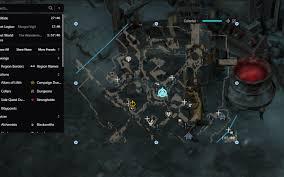
The foundation of accessibility in Diablo 4 begins with its onboarding experience. The campaign serves as an extended tutorial, introducing mechanics gradually rather than overwhelming new players with the full scope of systems at once. Skill points unlock at a measured pace, allowing players to experiment with abilities without the fear of permanent misallocation. The ability to refund skill points cheaply encourages experimentation, letting players discover synergies organically rather than following prescribed builds from external sources. This approach respects the player’s autonomy while providing guardrails that prevent the frustration of irreversible mistakes.
The game’s difficulty structure reinforces this philosophy. World Tiers provide clear, escalating challenges that players can choose to engage with at their own pace. The early tiers offer a forgiving experience where builds need not be optimized to succeed. Higher tiers introduce the complexity and challenge that veterans crave, but players are never forced to progress beyond their comfort level. This tiered system creates a natural progression where players can learn at their own speed, stepping into greater complexity only when they feel ready.
Itemization, historically one of the most intimidating aspects of the genre, has been progressively streamlined. The Loot Reborn update consolidated conditional affixes into clearer categories, making item comparisons instantly readable. Tempering provides deterministic crafting that reduces the reliance on random drops, while Masterworking offers incremental upgrades that give players a clear path to improving their gear. These systems are introduced gradually, with tooltips and tutorials explaining their function without assuming prior knowledge. The game communicates complex information through visual cues, with damage numbers, status effects, and item comparisons rendered in ways that are intuitive even for newcomers.
The social systems of Diablo 4 also embrace accessibility. The open world naturally creates opportunities for cooperation without requiring players to form formal parties. World bosses and legion events gather players automatically, allowing even solo-focused players to experience group content without social friction. The party finder tool, added in a later update, simplifies the process of finding groups for specific activities, reducing the barrier to entry for endgame content that previously required external coordination.
Perhaps most significantly, Diablo 4 has embraced accessibility in its seasonal model. Each season resets the playing field, creating moments when the entire community, veterans and newcomers alike, begins from the same starting point. This structure eliminates the intimidating gap that can form in persistent online worlds, where new players feel hopelessly behind those who have accumulated wealth and progress for years. The seasonal journey provides clear, structured goals that guide players through new content while rewarding their investment.
Diablo S12 Items’s accessibility evolution demonstrates that depth and approachability need not be opposing forces. The game has proven that complex systems can be taught clearly, that challenging content can coexist with welcoming onboarding, and that a game can serve both veterans seeking infinite complexity and newcomers taking their first steps into Sanctuary. The result is a community that continues to grow, a player base that spans skill levels and experience levels, and a game that fulfills the promise of the genre without the barriers that have historically kept players away.

 English
 French
 Spanish
 Portuguese
 Italiano
 Romaian
 Portuguese (Brazil)
 china
china