


 จองคิวบริการ
 NR tours
 Youplay
 NR shop
 NR jobs
 facebook th
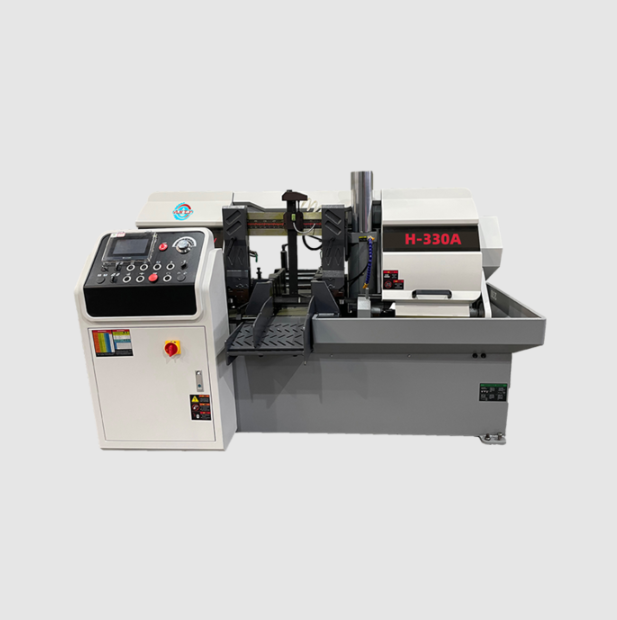
A vertical metal band sawing machine and band sawing machine are often selected in workshops where material utilization and cutting accuracy directly influence production cost. Many metal fabrication facilities deal with challenges such as uneven cut lengths, excessive scrap generation, and inconsistent edge quality. These issues not only affect product consistency but also increase raw material consumption over time.
Material waste in metal cutting is often linked to dimensional deviation. Even a small error of 0.3 mm to 0.5 mm per cut can accumulate across large production batches, leading to significant loss. In industries producing structural components or mechanical parts, tight dimensional control is necessary to avoid downstream assembly problems.
A band sawing machine helps reduce waste by maintaining continuous blade motion and controlled feed pressure. This allows the cutting process to remain stable across different material types. Unlike abrasive cutting methods that generate wider kerf loss, band saw cutting typically produces narrower cutting paths, improving material utilization efficiency.
Vertical cutting systems provide additional flexibility when working with irregular shapes or oversized workpieces. A vertical metal band sawing machine allows operators to guide materials manually, making it easier to optimize cutting layout and reduce leftover material sections. This is particularly useful in repair workshops and custom fabrication environments.
Blade selection plays a key role in controlling waste levels. Coarse tooth blades are often used for thicker materials, while finer tooth blades are preferred for thin-walled sections. Incorrect blade selection may result in chip clogging or uneven cutting lines, both of which contribute to material loss.
Cutting speed consistency also affects efficiency. When blade speed fluctuates during operation, cutting resistance becomes unstable, which may lead to deviation in final dimensions. Most modern band sawing machine systems are designed with variable speed control to maintain consistent performance across different materials.
Cooling fluid usage helps maintain cutting stability and reduces thermal deformation. Excess heat during cutting may cause material expansion, leading to inaccurate final dimensions once cooling occurs. A stable cooling system helps maintain dimensional accuracy throughout the process.
Workshop organization influences overall efficiency as well. Poor material handling or inefficient layout can increase non-cutting time, reducing productivity. When raw materials, cutting stations, and finishing areas are arranged logically, workflow becomes smoother and handling errors decrease.
Vibration is another factor that can influence cutting accuracy. Excessive vibration may cause blade wandering, especially when cutting harder materials. Machine frame rigidity and proper installation on stable flooring help reduce vibration impact during operation.
Feed control systems are often adjusted based on material type. Harder metals require slower feed rates to maintain cutting stability, while softer metals can tolerate higher feed speeds. Improper feed settings may increase blade wear or cause uneven cut surfaces.
A band sawing machine contributes to cost reduction by lowering scrap rates and improving cutting precision. Over time, improved accuracy reduces the need for secondary machining or corrective processing.
Maintenance routines also play a role in efficiency. Regular blade inspection, lubrication, and alignment checks help maintain stable performance. Neglecting maintenance may lead to gradual efficiency loss and increased operational cost.
Automation features are increasingly used in modern metal cutting environments. Digital control systems allow operators to preset cutting parameters, reducing variability between different operators. This improves consistency in mass production settings.
Energy consumption is another operational consideration. Compared with thermal cutting methods, band saw cutting generally requires less energy per unit of material removed. This makes it suitable for medium-scale workshops aiming to control operating costs.
Material hardness variation can also influence cutting results. Mixed batches of steel may require adaptive cutting settings to maintain consistent output quality. Operators often perform trial cuts before full production runs to ensure stability.
A vertical metal band sawing machine is particularly useful when working with non-standard shapes or repair components. Its flexible cutting orientation allows operators to adjust positioning more freely compared with fixed horizontal systems.
Industrial demand for efficient material usage continues to increase across manufacturing sectors such as automotive parts, machinery fabrication, and construction steel processing. Reducing waste while maintaining accuracy has become a key operational goal.
A band sawing machine remains an essential tool for balancing precision, efficiency, and cost control in metal processing environments. With proper setup and operational control, it supports stable production while helping reduce unnecessary material loss across different industrial applications.

 thai
thai
 French
 Spanish
 Portuguese
 Italiano
 Romaian
 Portuguese (Brazil)
 china
china